
Daffodil Health Launches No Surprises Act Dispute Management Solution
Daffodil Health launched an AI-powered solution to help payers manage No Surprises Act disputes by automating claims review, negotiations and arbitration workflows.
Daffodil Health launched an AI-powered solution to help payers manage No Surprises Act disputes by automating claims review, negotiations and arbitration workflows.

Included Health announced plans to acquire Firefly Health to accelerate its alternative health plan strategy for employers.


We have the opportunity to design systems that give people greater capacity for the work where human presence matters most: listening, understanding, reassuring, deciding, and caring.

Drug spending continues to grow, but that doesn’t mean that everyone is getting the medicines that they need. A panel at MedCity News’ Bullseye event discussed the evolution of the prescription drug marketplace.

GSK drug Jideytro received FDA approval for treating advanced cases of non-small cell lung cancer driven by ROS1 alterations. This molecule came from Nuvalent, which GSK recently acquired for $10.6 billion.

Merck’s Lipfendra is the first FDA-approved pill in the class of cholesterol-lowering drugs called PCSK9 inhibitors. While peptides are typically injected, Lipfendra is a macrocyclic peptide designed for formulation as an oral drug.

The House Ways and Means Committee unanimously advanced a bill to reform Medicare Advantage prior authorization requirements.

Enterprise EHR boosts scalability, interoperability, and governance for large healthcare systems.
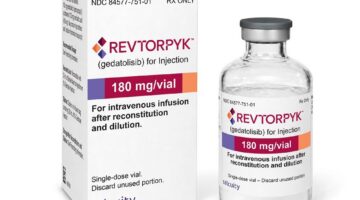
Celcuity drug Revtorpyk is now approved for advanced cases of the most common type of breast cancer that do not harbor a certain mutation. The intravenously infused medicine is first in a new drug class that addresses a pathway associated with many cancers.
The Coalition Against Surprise Medical Billing launched a campaign opposing the No Surprises Act Enforcement Act, arguing it would worsen IDR process abuse.

CMS’s new GLP-1 Bridge program expands Medicare access to obesity drugs but raises concerns about cost, supply and implementation challenges.

Handspring raised $19 million in Series B funding this week to expand its pediatric mental health care model nationwide. The company treats the full spectrum of acuity so children are matched to the level of care they actually need, rather than defaulting to the most intensive — and expensive — option available.


Veradigm examines key clinical trends, comorbidity profiles, and treatment trends across adolescence, reproductive years, and peri-/post-menopause. Download it today!

KFF found that ACA Marketplace insurers are proposing a median 14% premium increase for 2027, driven by rising healthcare costs and the expiration of enhanced premium tax credits.

FDA approval of Vera Therapeutics’ Trutakna makes it first in a new class of medicines designed to block two targets to treat immunoglobulin A nephropathy, an autoimmune disease that can progress to end-stage renal failure. Competition looms from Vertex Pharmaceuticals, on track to receive a November regulatory decision for a drug designed to block the same two proteins.

Pearl's $110 million raise includes a $50 million equity investment led by Andreessen Horowitz with participation from Viking Global Investors, AlleyCorp and Ulysses Capital, as well as a $60 million debt facility led by Trinity Capital.

Elevance filed a lawsuit last week against the Department of Health and Human Services and the Centers for Medicare & Medicaid Services, alleging that CMS unlawfully refused to recalculate Elevance's 2026 Medicare Advantage Star Ratings on the same basis that it recently recalculated Clover Health's ratings after a court ruling.

CMS published its proposed 2027 outpatient payment rule, including a 2.4% base rate increase alongside steep cuts to 340B drug payments and an expansion of site-neutral payment to off-campus imaging services. Provider groups warn that these changes would push many hospitals' payments into negative territory.